
In today’s rapidly evolving digital economy, visibility is no longer a luxury; it is a necessity. Businesses, brands, and professionals who once relied solely on referrals, physical presence, or word-of-mouth marketing are now discovering a hard truth: if you are not visible online, you are slowly becoming invisible in the marketplace.
Yet, despite this reality, a significant number of individuals and businesses still underestimate the value of a strong digital presence. Many treat it as an optional extension of their operations rather than a foundational element of modern growth. This mindset is quietly costing them opportunities, revenue, and long-term relevance.
The Shift From Physical to Digital First Impressions
There was a time when first impressions happened in person through storefronts, meetings, or physical interactions. Today, that first impression almost always happens online. A potential customer will search for a brand before they ever call, visit, or make a purchase decision.
What they find determines everything.
A poorly designed website, an inactive social media page, or worse — no online presence at all; instantly creates doubt. In contrast, a well-structured digital identity communicates credibility, professionalism, and trust even before a conversation begins.
This shift means that digital presence is no longer just marketing; it is reputation.
The Hidden Losses of Digital Absence
One of the most dangerous misconceptions in business is the belief that “if sales are still coming in, everything is fine.” However, what many do not realize is the volume of missed opportunities caused by weak or absent digital visibility.
Here are some of the invisible costs:
1. Lost Customers: People who search but never find you move on to competitors.
2.Reduced Trust: Lack of online proof raises questions about legitimacy.
3.Limited Reach: Word-of-mouth alone cannot scale beyond immediate networks.
4.Stunted Growth: Without digital systems, business expansion becomes unpredictable and slow.
These losses rarely show up on a balance sheet, yet they compound over time and quietly limit growth potential.
Why Digital Presence Has Become Non-Negotiable
Modern consumers behave differently. They are informed, connected, and highly selective. Before making decisions, they compare, research, and validate.
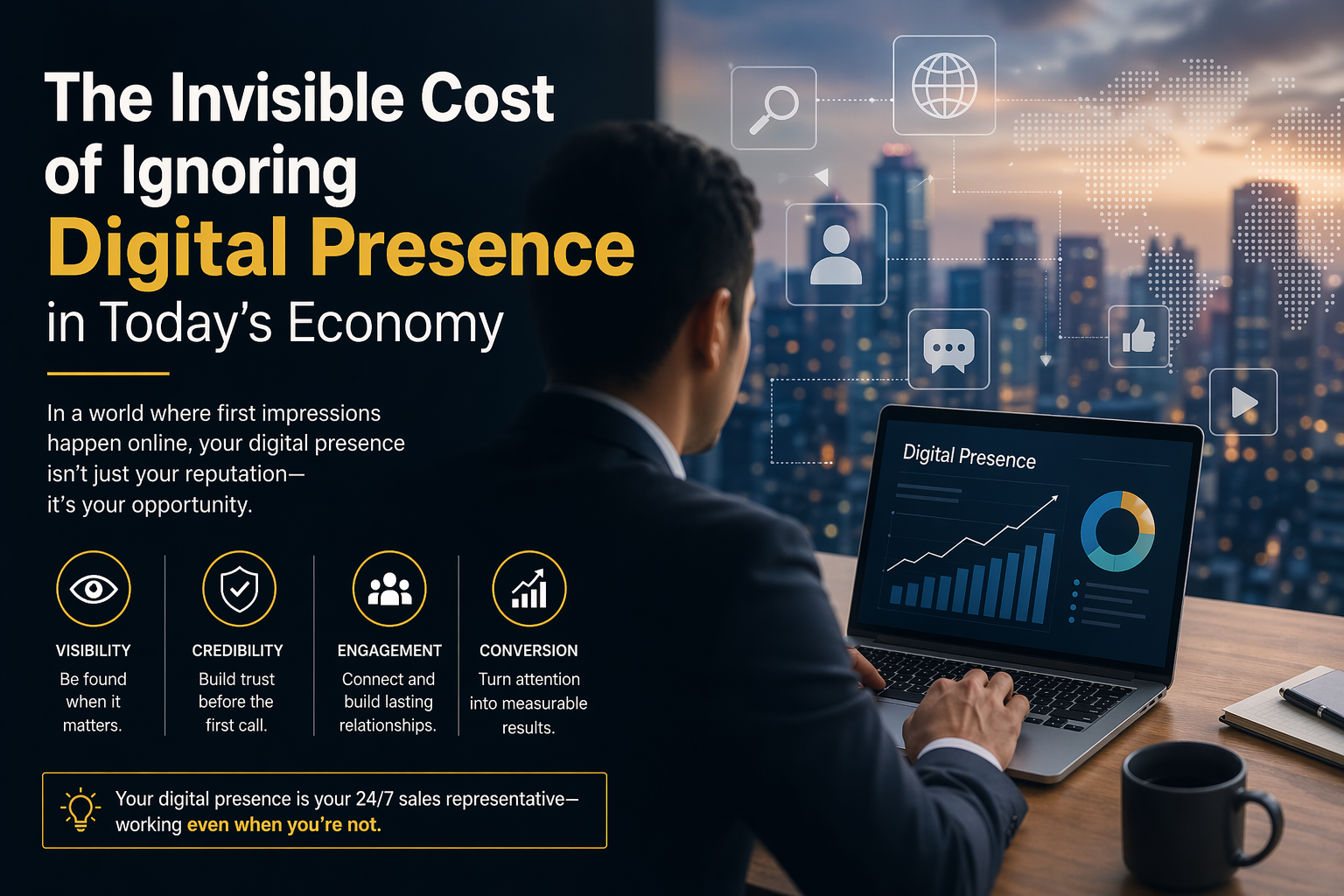
A strong digital presence now serves four critical roles:
1.Visibility: Ensuring people can find you when they need you.
2.Credibility: Establishing trust through consistent branding and information.
3.Engagement: Building relationships beyond physical boundaries.
4.Conversion: Turning attention into measurable business outcomes.
In essence, your digital presence is your 24/7 sales representative; working even when you are not.
The Role of Strategy Over Presence Alone
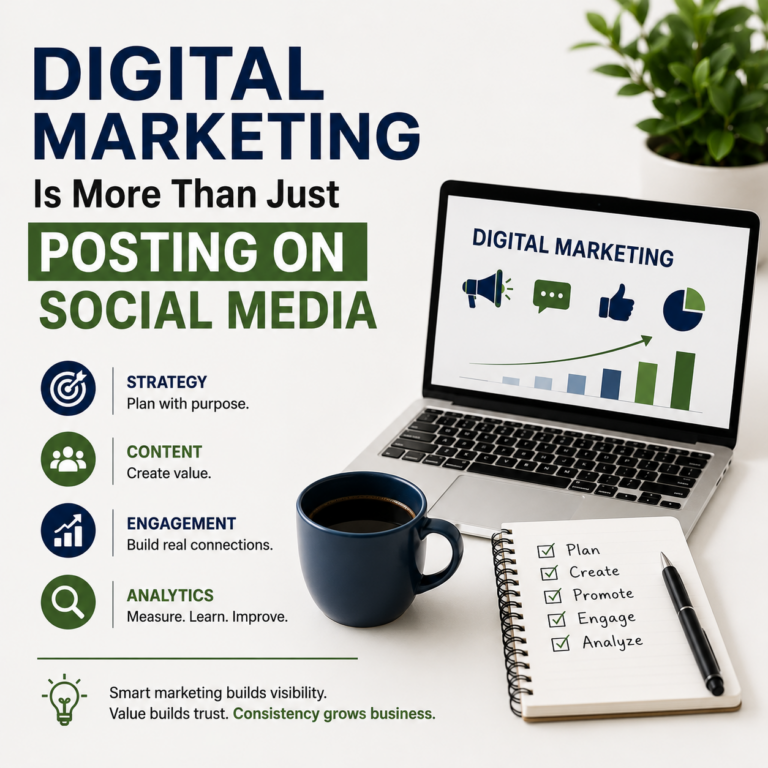
However, being online is not enough. Many businesses make the mistake of creating accounts or websites without a clear strategy. This results in scattered efforts that do not convert into meaningful growth.
A strong digital presence must be intentional. It should answer three core questions:
• Who are we speaking to?
• What problem are we solving?
• How do we consistently communicate value?
Without clarity in these areas, digital activity becomes noise instead of influence.
The Opportunity Most Businesses Are Missing
While some struggle to adapt, others are quietly scaling through digital systems; automating outreach, building authority through content, and leveraging platforms to attract global audiences.
This is where the opportunity lies.
We are currently in an era where small businesses can compete with large corporations simply by being more strategic online. Social media, websites, and digital tools have leveled the playing field in ways that were previously impossible.
The difference between those who grow and those who stagnate is no longer access; it is adoption.
Building a Future-Proof Digital Identity
To remain relevant in the coming years, businesses and professionals must begin to think beyond presence and focus on sustainability. A future-proof digital identity includes:
• A professional and optimized website
• Consistent branding across platforms
• Valuable and educational content
• Active engagement with audiences
• Systems that support lead generation and conversion
This is no longer about trends; it is about survival in a digitally driven economy.
Conclusion: Visibility Is the New Currency
In the modern economy, visibility translates directly into opportunity. If people cannot see you, they cannot trust you. If they cannot trust you, they cannot buy from you.
Ignoring digital presence is no longer a neutral decision; it is a costly one.
The businesses and professionals who will thrive in the next decade are not necessarily the biggest or the oldest, but the most visible, adaptable, and intentional in how they show up online.
The question is no longer whether digital presence matters.
The real question is: can you afford to remain invisible?